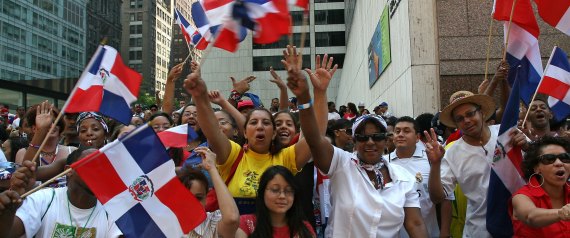
Showing posts with label dominicanos. Show all posts

Tuesday, July 30, 2013

Dominican tourism

Revisit Where Dominican Republic's Tourism Started

The North Coast Boasts Unique History, Natural Beauty and Exciting Activities

DOMINICAN REPUBLIC, May 29, 2013 /PRNewswire/ -- The Dominican Republic Ministry of Tourism is encouraging travelers to visit one of the first cities to capture the attention of tourists, Puerto Plata. 
The area's long stretches of unspoiled beaches, spectacular scenery and blends of history and adventure make it the perfect destination for every interest.  This versatile Caribbean playground has developed dramatically since it initially caught the public eye nearly 40 years ago. Packed with affordable and adventurous activities, and with the upcoming completion of the modern Amber Cove Cruise Center on the Bay of Maimon, the city is ready to welcome an influx of visitors.


"Puerto Plata's an enchanting province where culture, history and nature collectively create an atmosphere fit for free-spirits," said Magaly Toribio, Marketing Advisor for the Dominican Republic Ministry of Tourism. "Whether visitors surf along the coastline, experience energizing nightlife, feel the rush of the region's waterfalls or visit the Amber Museum, it will be an unforgettable escape."
Revisit the destination that had it all first and enjoy an incredible array of activities:
Water Sport Wonderland: When it comes to water sports, your selections are limitless. Cool breezes and gentle swells make Puerto Plata a world-renowned area for kitesurfing, wakeboarding and windsurfing. Visitors are drawn to Cabarete, the popular town recognized as the world's kiteboarding capital because of its warm waters and trade winds. Snorkelers gravitate toward Sosua, a small town where the water is decorated with spectacular coral reefs and a wide variety of fish. 


The 27 Waterfalls of Damajagua is nature's waterpark that features a series of spectacular waterfalls. Courageous visitors are encouraged to slide down natural water chutes or jump in the waters' peaceful pools. Those who prefer activities outside of the water can take a 30-minute scenic drive from Puerto Plata to Yasika Adventure Park and zip-line up to 30 mph at heights of 100 feet.
Golf Greens: Puerto Plata has three expertly-designed golf courses framed by the region's striking scenery. The Playa Dorada Golf Club, designed by world-renowned golf course architect Robert Trent Jones Sr., is in the Playa Dorada Resort Complex and known for its outstanding conditioning and greens. Los Mangos Golf Course is a diverse 18-hole course with nine sea views located in the Costambar residential development. Playa Grande Golf Course in Rio San Juan cuts into the cliffs overlooking the ocean with lush land and royal palms neighboring the course. No matter your skill set, Puerto Plata's courses are fit for both champion and leisure players. 

 Puerto Plata is an area with unbelievable architecture through which visitors gain insight into Dominican Republic's incredible history. Housed in an epitome of Victorian architecture known as Villa Bentz, is Puerto Plata's Amber Museum. It showcases some of the world's best and most rare amber collections dating back millions of years. While amber is one of Dominican Republic's staple products, so is its rum, which is often referred to as the world's best. The Brugal Rum Distillery produces more than one million liters of white and dark rum each year, and offers free guided tours. 
 
Download our Puerto Plata brochure and visit www.GoDominicanRepublic.com for more information.  

About Dominican RepublicDominican Republic's first tourist was Christopher Columbus in 1492. Rich in history, Dominican Republic has developed into a diverse destination offering both Dominican and European flavors to approximately five million global visitors in 2012. Named #1 Golf Destination in Caribbean & Latin America by the International Association of Golf Tour Operators, Dominican Republic boasts 28 designer golf courses, upscale resorts, pristine nature reserves, sophisticated cities and quaint villages filled with friendly Dominican people.  Dominican Republic features the best beaches, fascinating history and culture, and is a chosen escape for celebrities, couples and families alike.  

Visit Dominican Republic Ministry of Tourism's official website at: www.GoDominicanRepublic.com.

Follow us on Twitter @GoDomRep. Like us on Facebook GoDominicanRepublic

Sunday, July 14, 2013

Facts about dominicans in USA..


Dominicans were part of one of the largest migratory booms of the late 20th century. This migratory boom is made evident not just by the presence of Dominicans as an ethnic group, but from the Hispanic/Latino community in general.

An estimated 1.5 million Hispanics of Dominican origin resided in the United States in 2010, according to the Census Bureau’s American Community Survey. Dominicans in this statistical profile are people who self-identified as Hispanics of Dominican origin; this means either they themselves are Dominican immigrants or they trace their family ancestry to the Dominican Republic.

Let me tell you some facts:

  •  Immigration status. Nearly six-in-ten Dominicans (57%) in the United States are foreign born compared with 37% of Hispanics and 13% of the U.S. population overall. Most immigrants from the Dominican Republic (63%) arrived in the U.S. in 1990 or later.
  •  
  •  Educational attainment. Dominicans have higher levels of education than the Hispanic population overall. Some 15% of Dominicans ages 25 and older—compared with 13% of all U.S. Hispanics—have obtained at least a bachelor’s degree.

  •  Language. A majority (55%) of Dominicans speak English proficiently.3 The other 45% of Dominicans ages 5 and older report speaking English less than very well, compared with 35% of all Hispanics.

  •  Regional dispersion. Eight-in-ten Dominicans (79%) live in the Northeast, and nearly half (48%) live in New York.


 In considering those who are of Dominican ancestry this figure would almost certainly be much higher. And of all registered ethnic groups from Latin America, Dominicans make up the third largest group, after Mexicans and Cubans.


What characterizes Dominicans as an ethnic group in the United States is that they, unlike other groups that have come to the US, haven’t assimilated in the same way. Remittances from Dominicans in the US amount to an estimated 2 billion dollars a year, second only to Salvadoran remittances, which indicates a strong connection to the land of origin. Dominicans in the US also carve out particular enclaves within American cities, and tend to segregate themselves from other Hispanic and non-Hispanic groups. This is made evident by communities such as New York’s Washington Heights, which has the largest per capita concentration of Dominicans in the US

Spanish is the language of choice for most Dominicans, and another aspect that is characteristic of Dominicans is that they, unlike many other ethnic groups, refer to themselves as Dominicans, and not Dominican-Americans. Cubans, whether born in the US or not, call themselves Cuban-Americans, Puerto Ricans are referred to as Puerto Rican-Americans (or Nuyoricans in some cases), and Mexicans born in the United States are referred to as Chican@, all reflecting a joint level of pride for both heritages, but Dominicans have yet to embrace this as part of their identity.

They are ultimately very nationalistic, and the resounding idea among many Dominicans is that they are only in the US for limited periods of time in order to make money. Dominicans are inherently tied to their roots, and hold an overwhelming level of pride towards their culture and customs, which they aren’t willing to give up easily.


The situation for Dominicans in the United States is changing. With the growth of a more educated and skilled second generation, and an emphasis from within the Dominican community to integrate, it is only a matter of time before Dominicans become a more prominent part of American society, leaving behind the tainted image they have; though this won’t be easy. In the process, the Dominican community must come to terms with the creation of a bi-cultural generation of youth that is unable to find its own voice, while at the same time providing disenfranchised young people with the assurance that they are accepted members of both the Dominican and American communities.

Alongside the cultural struggles that face the future progress of the Dominican community is the advancement towards economic prosperity that can only further consolidate stability for this ethnic group

Thursday, July 4, 2013

Dominican Exportations


What are the exportation products from Dominican Republic?


We recently saw an increment in exportation of 44 % in relation to the last year..We are going to mention 20 products exported by DR

Dominican Republic exportation have really diversified in the last couple of years and has passed from some minor exportation of US$428 millions in 2004 to US$2,362 millions in 2011, ..And that means those minor products have been multiply by 500%

  • 1.-Machines for blood transfusion
    US$147.66 ( in millions)
    I would NEVER though this would be the number 1 exportation of DR


  • 2.-Cotton textile
    US$118.28


  • 3.-Handmade Cigars
    US$102.45

  • 4.-Sugar
    US$100.30


  • 5.-Bonao's ferroniquel
    US$72.27


  • 6.-Electrical switches
    US$68.26


  • 7.-Disposable medical equipment
    US$66.83


  • 8.- Gas ( yes, gas !)
    US$60.27


Besides that we got steel rod,US$60.16 millions disposable sheets,US$48.60millions and rum US$42.87millions

Other products: steel, rod, surgical stitches, cocoa beans, flour, white cement, organic bananas and machinery to measure blood pressure.

One low note is that between 2005 and 2011 the importation has double in DR , and 60% of it is oil and fuel, including coal.


One thing that was missing in that budget was Barrick Gold exportation= $0 and the Dominican government desperately need that income to execute several important projects

Another interesting note is the diversification of traditional exportation agrarian products in national economy.


Our biggest goal now is our own believe that we can export , because exportation were the Cinderella of the strong currency generators in DR so far.
Our forecast is that situation is going to change pretty soon being exportation one of the biggest engines in Dominican economy due to the increase of production, sales, opportunities and channels of distribution.


There is a project executed by ADOEXPO with the BID with the mission of helping the agrarian exportation companies overcome the obstacles to get their produce into central America and the Caribbean under the CAFTA agreement, something that we have under exploited yet, so we will see a bigger increase of agrarian produce exportation as well.

We need to identify the biggest challenge for exportation for the small and middle enterprises, and of course with the help and support of Danilo's administration.

Thursday, June 13, 2013

Where are you from? From the Island of la Hispaniola , la isla de Santo Domingo o Saint-Domingue?

Where are you from? Quisqueya, Santo Domingo, Haiti, La Espanola o la Hispaniola?


I was having an argument in South Florida.An old friend of mine was arguing that he was from la Hispaniola, I told him I am from the Island of Santo Domingo, so probably we are from different countries.

Sometimes when people ask me where i am from, saying i am Dominican, I have to clarify that i am dominican from Dominican republic, not from the island of Dominica, so it get more confusing..

To clarify this I have to go back to my own people history...


La Española es una isla situada en el archipiélago de las Antillas Mayores en el Caribe, la cual contiene a los estados soberanos República Dominicana y Haití.

La Española es conocida por ser el lugar del primer asentamiento europeo en el Nuevo Mundo, descubierta por Cristóbal Colón en su primer viaje en 1492.
Es la décima isla más poblada del mundo, y la más poblada de América.
Es la isla número 22 en tamaño en el mundo.

The island bears various names originated by its native people, the Taíno Amerindians. When Columbus took possession of the island in 1492 he named it Hispana in Latin and La Isla Española, meaning "The Spanish Island", in Spanish. Bartolomé de las Casas shortened the name to "Española", and when Pietro Martyr d‘Anghiera detailed his account of the island in Latin, he translated the name as Hispaniola, Because Anghiera’s literary work was translated into English and French in a short period of time, the name "Hispaniola" became the most frequently used term in English-speaking countries for the island in scientific and cartographic works.


Gonzalo Fernández de Oviedo and de las Casas documented that the island was called Haití ("Mountainous Land" by the Taíno. D‘Anghiera added another name, Quizqueia (supposedly "Mother of all Lands", but later research shows that the word does not seem to derive from the original Arawak Taíno language.] Although the Taínos use of Haití is verified and the name was used by all three historians, evidence suggests that it probably was not the Taíno name of the whole island. Haití was the Taíno name of a region (now known as Los Haitises) in the northeastern section of the present-day Dominican Republic. In the oldest documented map of the island, created by Andrés de Morales, that region is named Montes de Haití ("Haiti Mountains".
Las Casas apparently named the whole island Haití on the basis of that particular region;] d‘Anghiera said that the name of one part was given to the whole island

The colonial terms Saint-Domingue and Santo Domingo are sometimes still applied to the whole island, although these names refer, respectively, to the colonies that became Haiti and the Dominican Republic.

The name] Haïti was adopted by Haitian revolutionary Jean-Jacques Dessalines as the official name of independent Saint-Domingue, as a tribute to the Amerindian predecessors. Quisqueya (disambiguation needed] (from Quizqueia) is used to refer to the Dominican Republic.

So, after this small research, I am confused how to answer the question of "where are you from?"


So ,after all this information, in the future..If somebody ask you..where are you from..What will you answer and why?
Edited on 6/12/2013 2:24 PM by ohhhvictor.

Tuesday, June 4, 2013

The first immigrant in NY was dominican !

Juan Rodriguez , first foreigner ( and dominican! ) in NYC, 1613


At the renaming of Broadway into Juan Rodriguez Way. The first nyc immigrant from 1625 who was a black, free dominican man.


About three miles of northern Manhattan today honor a man who, until recently, was unknown to most of the people who live there.

Juan Rodriguez Way will be the name of Broadway from 159th to 218th Streets, after an early settler from Santo Domingo who reportedly arrived in New York in 1613. Rodriguez is believed to be the city’s first Dominican immigrant, as well as its first free black settler, its first Latino and its first non-Native American merchant.

“It completely re-conceptualizes the Dominican presence in NYC,” said Led Black, a local Dominican-American writer and editor of the Uptown Collective. “I think many Dominicans feel that even though we have been a part of this city for quite some time now, we have been left out of the city’s narrative and that is starting to change finally.”

Though many uptown residents are now learning about Rodriguez through efforts by the CUNY Dominican Studies Institute, which uncovered his story, Rodriguez’s existence had been completely unknown by the uptown community, with its high Dominican population.

Anthony Stevens, an assistant director at the Dominican Studies Institute, worked to unravel Rodriguez’s history and pushed for the Broadway co-naming. From what Stevens and other researchers have gathered so far, Rodriguez appears to have landed somewhere in the Hudson Bay area while on board a Dutch expedition ship.

“He’s sort of the first immigrant,” Stevens said. “Not just the first settler, because he came from afar — another culture, another place.”

Black noted the renewed sense of pride Rodriguez’ history offered Dominicans.

“People are generally happy to find out our history predates the last 50 years,” he said. “Most had no idea but once they knew, they were pretty proud of it.”

Many locals, though unfamiliar with Rodriguez, found the history interesting. Mary Kate Burke, a teacher born and raised in Inwood, was fascinated by the news.

“That is really amazing,” she said. “The thing about this area is, you always associate Dominican culture with the influx of immigrants in the ‘60s or ‘70s, not the 1600s.”

Emmanuel Abreu, lifetime local of Washington Heights, was one community member familiar with Juan Rodriguez and the upcoming street co-naming.

“I think it’s important to everyone, especially Dominicans in Washington Heights,” Abreu said. “Or at least it should be.”


An archival document about Juan Rodriguez from the Archives of the City of Amsterdam. (Reproduction by the CUNY Dominican Studies Institute)

El primero de nosotros en estas tierras! Seguimos sigiendole sus pasos!
Arriba esas banderas!

Tuesday, May 28, 2013

Dominican Republic

La Republica Dominicana


Dominican Republic ( o republica dominicana) is   a nation on the island of Hispaniola,(or Island of Santo Domingo) part of the Greater Antilles archipelago in the Caribbean region  . The western third of the island is occupied by the nation of Haiti,  . Both by area and population, the Dominican Republic is the second largest Caribbean nation , with 48,445 square kilometres (18,705 sq mi) and an estimated 10 million people, almost three million of which in the capital city, Santo Domingo.

 The Dominican Republic has the ninth largest economy in Latin America and the  largest economy in the Caribbean and Central American region according to the U.S. State Department .Though long known for sugar production, the economy is now dominated by services. The country's economic progress is exemplified by its advanced telecommunication system.

 The Dominican Republic is the most visited destination in the Caribbean. The country's year-round golf courses are among the top attractions on the island In this mountainous land is located the Caribbean's highest mountain, Pico Duarte, as is Lake Enriquillo, the Caribbean's largest lake and lowest elevation. It has an average temperature of 26 °C (78.8 °F) and great biological diversity. Music and sport are of great importance in the Dominican culture, with Merengue and Bachata as the national dance and music, and baseball as the favorite sport.[


National name: República Dominicana
Ethnicity/race: white 16%, black 11%, mixed 73%
National Holiday: Independence Day, February 27
Religion: Roman Catholic 95%


Geography

The Dominican Republic in the West Indies occupies the eastern two-thirds of the island of Hispaniola, which it shares with Haiti. Its area equals that of Vermont and New Hampshire combined. Duarte Peak, at 10,417 ft (3,175 m), is the highest point in the West Indies.

Government

Representative democracy.


History

The Dominican Republic was explored by Columbus on his first voyage in 1492. He named it La Española, and his son, Diego, was its first viceroy. The capital, Santo Domingo, founded in 1496, is the oldest European settlement in the Western Hemisphere.
 
Spain ceded the colony to France in 1795, and Haitian blacks under Toussaint L'Ouverture conquered it in 1801. In 1808, the people revolted and captured Santo Domingo the next year, setting up the first republic. Spain regained title to the colony in 1814. In 1821 Spanish rule was overthrown, but in 1822 the colony was reconquered by the Haitians. In 1844, the Haitians were thrown out and the Dominican Republic was established, headed by Pedro Santana. Uprisings and Haitian attacks led Santana to make the country a province of Spain from 1861 to 1865.
President Buenaventura Báez, faced with an economy in shambles, attempted to have the country annexed to the U.S. in 1870, but the U.S. Senate refused to ratify a treaty of annexation. Disorder continued until the dictatorship of Ulíses Heureaux; in 1916, when chaos broke out again, the U.S. sent in a contingent of marines, who remained until 1924.
A sergeant in the Dominican army trained by the marines, Rafaél Leonides Trujillo Molina, overthrew Horacio Vásquez in 1930 and established a dictatorship that lasted until his assassination in 1961, 31 years later. In 1962, Juan Bosch of the leftist Dominican Revolutionary Party, became the first democratically elected president in four decades.

Freely-Elected President Balaguer Witnesses Withdrawal of Foreign Troops
In 1963, a military coup ousted Bosch and installed a civilian triumvirate. Leftists rebelled against the new regime in April 1965, and U.S. president Lyndon Johnson sent in marines and troops. After a cease-fire in May, a compromise installed Hector Garcia-Godoy as provisional president. In 1966, right-wing candidate Joaquin Balaguer won in free elections against Bosch, and U.S. and other foreign troops withdrew.
In 1978, the army suspended the counting of ballots when Balaguer trailed in a fourth-term bid. After a warning from President Jimmy Carter, however, Balaguer accepted the victory of Antonio Guzmán of the Dominican Revolutionary Party. In 1982 elections, Salvador Jorge Blanco of the Dominican Revolutionary Party defeated Balaguer and Bosch. Balaguer was again elected president in May 1986 and remained in office for the next ten years.
In 1996, U.S.-raised Leonel Fernández secured more than 51% of the vote through an alliance with Balaguer. The first item on the president's agenda was the partial sale of some state-owned enterprises. Fernández was praised for ending decades of isolationism and improving ties with other Caribbean countries, but he was criticized for not fighting corruption or alleviating the poverty that affects 60% of the population.


President Fernández Lights Fire Under Dominican Republics Failing Economy
In Aug. 2000, the center-left Hipólito Mejía was elected president amid popular discontent over power outages in the recently privatized electric industry, but in May 2004 presidential elections, he was defeated by former president Leonel Fernández (1996–2000). Fernández instituted austerity measures to rescue the country from its economic crisis, and in the first half of 2006, the economy grew 11.7%.
On May 16, 2008, incumbent president Leonel Fernández was reelected, taking 53% of the vote. He defeated Miguel Vargas of the Dominican Revolutionary Party, who won 41%.

Among the First to Offer Aid to Haiti
After the devastating earthquake on January 12, 2010 in Haiti, the Dominican Republic was one of the first countries to offer aid despite the two countries having a history of conflict. The Dominican Republic sent food, medicine, and teams to assess the damage. The country also eased visa requirements so the injured could seek treatment at Dominican hospitals.
Over a year later, in the spring of 2011, protests started and signs were posted, calling for the refugees to go home. By August 2011, Haitian refugees were turned away at the border and in some cases, deported. The shift in attitude showed impatience with Haiti's slow recovery as well as other concerns, including a high unemployment rate, among the highest in Latin American, and cholera, which had killed more than 90 people in the Dominican Republic, many of them Haitian migrants.
In October 2011, the Inter-American Commission on Human Rights (IACHR) received over 450 complaints from people in the Dominican Republic who said their citizenship had been revoked. The complaints came from people who have been recognized as citizens for decades. The IACHR condemned the policy, but on December 1st, the country's Supreme Court rejected a Dominican-born male's request for a birth certificate so he could relocate to the United States. The new policy could affect some 200,000 Dominicans of Haitian origin.


Ruling Party Candidate Wins Presidential Election
In May 20, 2012, Danilo Medina, candidate of the ruling Dominican Liberation Party, won the presidential election. Medina narrowly defeated Hipólito Mejía, receiving 51.24 percent of the vote. Voting fraud allegations followed the election, including claims from other political parties that votes were bought. The Organization of American States confirmed vote-buying, but concluded that it was not enough to determine the outcome of the election so the organization approved the results.
On August 16, 2012, Medina takes over for Leonel Fernández, who has been president for 12 of the last 16 years. Fernández's wife, Margarita Cedeño, will serve as Medina's vice-president. Fernández is eligible and expected to run for another term (his fourth) in 2016.

Tourism


Tourism is fueling the Dominican Republic's economic growth. With the construction of projects like Cap Cana, San Souci Port in Santo Domingo, and Moon Palace Resort in Punta Cana, the Dominican Republic expects increased tourism activity in the upcoming year. Ecotourism has been a topic increasingly important in the nation, with towns like Jarabacoa and neighboring Constanza, and locations like the Pico Duarte, Bahia de Las Aguilas and others becoming more significant in efforts to increase direct benefits from tourism. Most residents from other countries are required to get a tourist card, depending on the Country that he or she lives in.


Sports

 Baseball is by far the most popular sport in the Dominican Republic. The country has a baseball league of six teams.

  After the United States, the Dominican Republic has the second-highest number of Major League Baseball (MLB) players. Ozzie Virgil, Sr. became the first Dominican-born player in the MLB on September 23, 1956. Juan Marichal is the only Dominican-born player in the Baseball Hall of Fame. Other notable baseball players born in the Dominican Republic are: Robinson Cano, Julian Javier, Pedro Martínez, Francisco Liriano, Manny Ramírez, Jose Bautista, Hanley Ramírez, David Ortiz, Albert Pujols, Ubaldo Jiménez, José Reyes, Alcides Escobar, Plácido Polanco and Sammy Sosa. Felipe Alou has also enjoyed success as a manager, and Omar Minaya as a general manager. In 2013, the Dominican team went undefeated en route to winning the World Baseball Classic.


In boxing, the country has produced scores of world-class fighters and several world champions.Basketball also enjoys a relatively high level of popularity. Al Horford, Felipe Lopez, and Francisco Garcia are among the Dominican-born players currently or formerly in the National Basketball Association (NBA). Olympic gold medalist and world champion hurdler Félix Sánchez hails from the Dominican Republic, as does NFL defensive end Luis Castillo.Other important sports include, Volleyball, which was introduced in 1916 by US Marines, is controlled by the Dominican Volleyball Federation. Other sports include Tae Kwon Do, in which Gabriel Mercedes is an Olympic silver medalist; and Judo.


Music


 Musically, the Dominican Republic is known for the creation of the musical style called merengue, a type of lively, fast-paced rhythm and dance music consisting of a tempo of about 120 to 160 beats per minute (though it varies) based on musical elements like drums, brass, chorded instruments, and accordion, as well as some elements unique to the Spanish-speaking Caribbean, such as the tambora and güira.

 Some well-known merengue performers include Johnny Ventura, singer/songwriter Juan Luis Guerra, Fernando Villalona, Eddy Herrera, Sergio Vargas, Toño Rosario, Milly Quezada, and Chichí Peralta. Merengue became popular in the United States, mostly on the East Coast, during the 1980s and 1990s, when many Dominican artists, among them Victor Roque y La Gran Manzana, Henry Hierro, Zacarias Ferreira, Aventura, and Milly Jocelyn Y Los Vecinos, residing in the U.S. (particularly New York) started performing in the Latin club scene and gained radio airplay. The emergence of bachata, along with an increase in the number of Dominicans living among other Latino groups in New York, New Jersey, and Florida have contributed to Dominican music's overall growth in popularity


Monday, May 27, 2013

Video of Dominican Republic


Video of what's Dominican Republic is all about..

Narciso Gonzalez ( Narcisazo )
Desaparecido el 26 de mayo del 1994, yo me pregunto si es que algunos pueblos simplemente no tienen memoria. 


Santo Domingo.- (mayo 1998).- El clamor por que sea aclarado el paradero del profesor
universitario Narciso González, Narcisazo, ha crecido a iniveles inusitados durante las últimas semanas, y ya hasta la Comisión Interamericana de Derechos Humanos se ha interesado en el caso. 
 
Narcisazo desapareció sin dejar rastro visible el 26 de mayo de 1994, horas despues de acudir a la estatal Universidad Autónoma de Santo Domingo (UASD), donde propuso iniciar un estado de "rebeldia" nacional para "resistir" un denunciado "fraude electoral" que se alega favoreció al ex presidente Joaquín Balaguer.
El profesor universitario, que era catedrático en la UASD, se caracterizó por mantener una postura de firme oposición al régimen de Balaguer, de quien llegó a afirmar que era "lo más perverso". 

En las aulas universitarias sus prédicas contra el gobierno de Balaguer no se hacían esperar y era visto con frecuencia colaborando con grupos comunitarios, generalmente cercanos a la oposición.
 
Poseedor de un agudo y fino nivel literario, con frecuencia concebía artículos y consignas de caracter politicos, haciendolas acompañar de "décimas" (especie de versos elaboradas habitantes de las comunidades rurales).

 El 26 de mayo, Narcisazo desapareció sin dejar rastros. Al principio, la prensa dominicana acogió la noticia como si se tratara de un simple extravío, pero contínuas versiones llegadas hasta los parientes del educador, los llevaron a elaborar la hipótesis de que estaban en presencia de un crímen politico.

Conclusiones

A manera de conclusión debemos señalar que en este caso resaltan:
1) Las contradicciones en que incurren los miembros de la propia familia del desaparecido al ofrecer testimonios.
2) Las lagunas de la investigación realizada por la Comisión de Oficiales de la Policía, la cual nunca llegó al fondo ni interrogó a ninguno de los funcionarios mencionados por el doctor González en su artículo y en su discurso (Manuel Guarda Liranzo, Aníbal Páez, Juan José Arteaga, Rafael Bello Andino, Ramón Pérez Martínez asi como las que eran jefes de la Policía, la Fuerza Aérea y el Ejército al momento de la desaparición).
3) Tampoco nunca fueron interrogados Amaury González, el otro hijo de Narciso, ni tampoco la señora Lucila Ramírez, madre de Luz Altagracia, para que certificara si ciertamente esta última estaba o no en su casa (de Lucila) cuando se  produjo la desparición.
El escándalo que rodeó el Caso de Narcisazo coincidió con el estado de agitación que se vivió en el país, y que dió origen en el 1996 al acortamiento del mandato de Balaguer a dos años.

A buen precio
Por: Narciso Gonzalez

Al mercado de conciencias
ahora mismito me voy.
Basta ya de esas locuras de ''patria'', ''justicia'', ''honor'',
que llevo un cuarto de siglo
defendiendo con pasión
y solo me han dado
angustia, miseria y persecución

Al mercado de conciencias
ahora mismito me voy.
Confieso que he sido lento
para buscar comprador,
porque muchos,
casi todos,
lo de mi generación,
hace tiempo ya maduraron,
hicieron la operación,
y miren que buen balance se produjo a su favor:

Consiguieron casa propia con solo dar ''convicción'';
cambiaron por altos cargos el índice acusador;
están sus cuentas azules
por ampliar su relación;
van y vienen por los aires
cual nuevos Santos Durnont,
y mantienen a sus niños
como hijos de Cristian Dior
a cambio de hablar de ''calma'',''progreso'' y ''conciliación'',
ir hermoso a la pantalla
junto a un entrevistador.

Si señor, llego la hora
de hacer yo buena inversión
y al mercado de conciencias
ahora mismito me voy.

Y como se que por viejo
soy mercancía sin valor
este será el baratillo
que ofreceré al comprador:

Callaré mi voz de trueno
si se confisca la Gulf.

Si me dan Reforma Agraria
jamás hablo del sudor.

Cambiare mi Rebeldía
por la Alfabetización.

No vuelvo a escribir un verso
si acaban la represión.

Y dejare la manía
de ser un agitador
si cogen la deuda externa
y le aplican un borrón,
y entregan a los obreros
los medios de producción.

¿Que dicen? ¿Que no es así que hacen la negociación?
¿Que hay que darlo todo junto
y pedir solo un solo favor?
Pues bien, que cojan mi cuerpo
mi pensamiento y mi voz,
y a cambio de todo eso
me den la revolución!

Sunday, May 26, 2013

You know you are dominican if

For 50 things…
YOU KNOW YOU’RE DOMINICAN IF . . .


If Some of your favorite expressions consist of:
“coño”
“Anda la mierda”
“Anda el diablo”
“El diache”
“Que Vaina”
“Dimelo”
“Ta’ To”
“Y Es Facil”
“Que lo Que?”
“A Po Ta Bien”
“Que Tripeo”
“Tu si Jode”
“Ta Cool”
“Ta Jevi”
“La creta”
“Tu ta pasa”
“Cojelo suave”
“Que Bufeo”
“Degrasia”
“Mariconaso”
“Malba”
“Barbarasa”
“Pariguayo”


If you live, or got family livin in Washington Heights (better said Guaachinton Heights) . . . Or NY in general, this also includes Florida…
If people tell you to stop screaming when you’re really talking
If you grew up afraid of something called “El Cuco”
If you clap your hands while laughing
If you have more Primos and Primas, and you talk about at least one that is famous or rich (lots of cousins).
If your able to dance without any music
If you learned how to dance merengue and bachata before you could walk
If you point things out with your nose and mouth
If you’ve ever gotten beat with any of the following:
rubber slippers, extension cord, hanger (plastic or metal), big rice spoon
If you waste ALL your money in the summer time buying “frio-frio” RED FLAVOR
If you’ve ever gone outside in rolos and chancletas
If you consider a siesta a sacret tradition for the family. Specially between noon and 2pm where the family gets together and eats, more platanos, rice & beans of course…

If your parents go to a little room in the back of your local bodega “pa juga lo numero” of DR
If you consider platanos one of the major food groups
If you can smell chuletas cookin in your house from down the block
If while in your country, you hear people on the block yellin “se fue la luz!”; Them you also hear “Llego La Luz”

If your house in DR has an oil lamp in every room
If you told scary stories and funny jokes while there was no electricity
If you grew up listening to Fernandito Villalona, Sergio Vargas, and Los Hermanos Rosario
If your dad or uncle claim to be dead broke, yet rock a cell phone and is laced wit mad gold around his neck and wrists
If you Drop Liquor on the floor and say “eso e pa lo muerto!”
If you like El Concon (which is the hard part of the rice) and Habichuelas con dulce.
If you’ve ever gotten whipped by a diablo cojuelo or lechon
 
If your grandma has a saint picture in her living room
If your sofas are covered in plastic
If you all the juices you have in your house are the type that come in powder, and you just mix with water, like Tang
If you eat Mangu on a daily basis

If you ate rice, beans and some type of meat for dinner yesterday, today and probably will tomorrow. Also for breakfast, lunch and dinner…
If you say words like . . . . . . . . Razor is GILE . . . . . . . . Nailpolish is CUTé . . . . . . . Feminine Pads are KOTE . . . . . . . . Vicks Vapo Rub is Vivaporu . . . . . . . . T-Shirts are POLOCHE . . . . . . . . Watchman is GUACHIMAN . . . . . . . . .Garbage is EL Gabish . . . . . . . .Cereal is CONFLE
(Yea you all know you do it!)
If you believe Vivaporu is the cure for EVERYTHING
If you in a 4-passenger car, u got 7 people in it, and someone yellin “caben ma”
If you’ve ever been in a carro publico ;)
 
If you use an old t-shirt, towel, or anything as a mop, and use your feet to mop
If you’ve ever let some one throw AGUA FLORIDA on you for good luck
If your house on the island has broken pieces of glass to keep away robbers
If you refer to every cat as MISHU
If your childhood games were called: EL ESCONDIDO, POLLITO PLEIBI, APARA Y BATEA, EL GALLO, or that game with a stick and a wheel
IF your parents dressed you up for Halloween as a VAQUERO, CAMPESINA, GITANA, OR HAWALLANA
If your refridgerator has about 85 magnets on it
If all your pots and pans are inside the oven
If your local bodega does lay-a-away/credit plans (fiao)
If you think Bananas or Platanos are a source of Power and call it “Banana Power”.


If you are proud of your roots, and everywhere you go you take DR with you..Because DR will never leave you..